Coated vs Uncoated Paper and Card: What’s the Difference and Which Should You Choose?
Every printing job starts with a decision that’s easy to overlook: what should it actually be printed on? Choosing between coated vs uncoated paper affects far more than how a piece feels in someone’s hand — it changes how your colours look, how your text reads, and even how professional your business appears. At Siang Heng, we get asked about this almost every day, from SMEs ordering their first batch of business cards to marketing teams planning a flyer campaign, so we’ve put together this guide the way we’d explain it to a customer standing at our counter.
There’s no single “correct” answer here — the right paper depends on what you’re printing, who’s going to receive it, and the impression you want to leave. Let’s walk through the differences so you can make that call with confidence.
What Is Coated Paper?
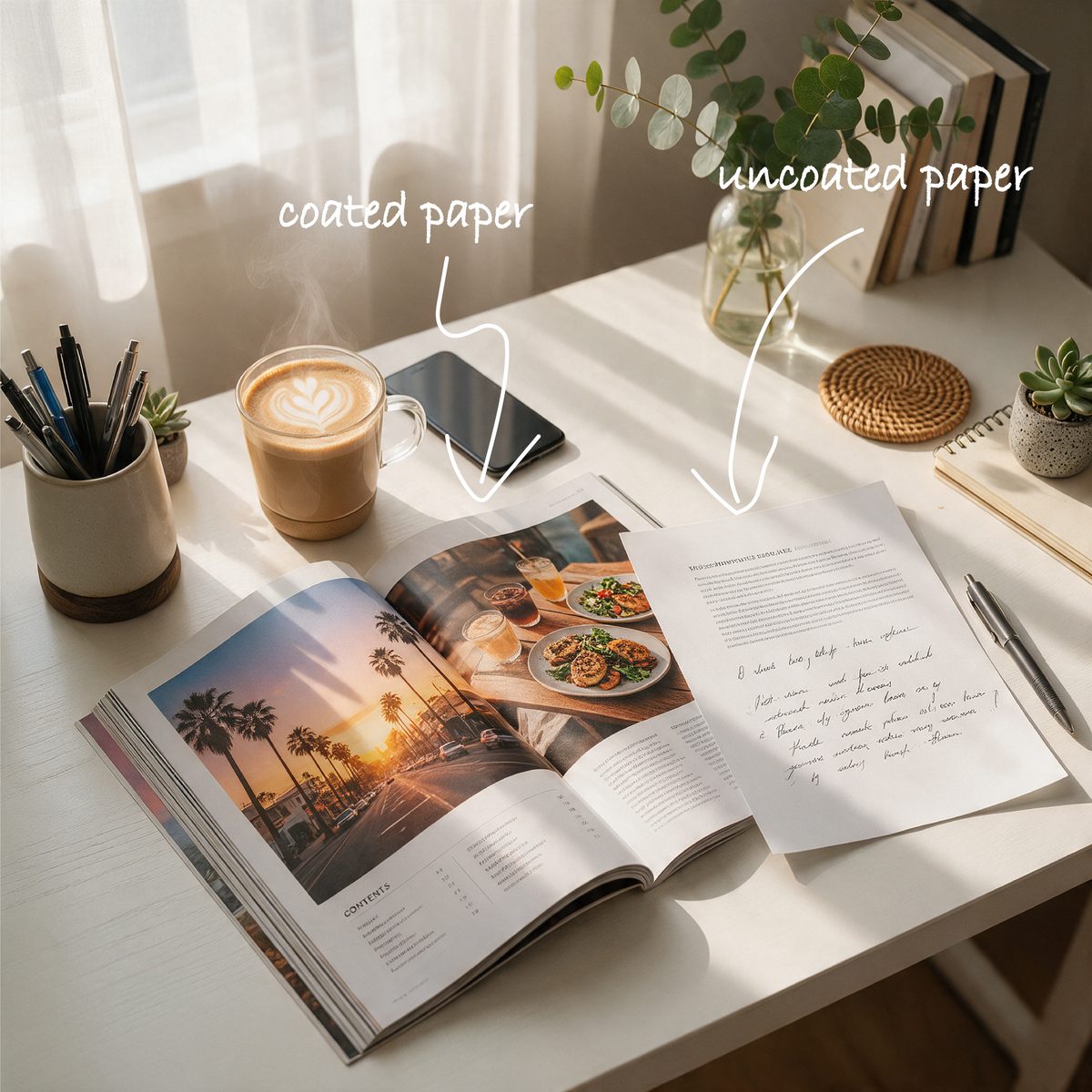
Coated paper has a thin layer applied to its surface during manufacturing — usually a clay or polymer coating — which seals the fibres of the paper. This coating is what gives coated stock its smooth, refined surface. Because the surface is sealed, ink sits on top of the paper rather than soaking into it, which is why colours on coated paper tend to look sharper and more saturated.
What Is Uncoated Paper?
Uncoated paper, as the name suggests, has no surface coating. The natural paper fibres are left exposed, which gives it a more textured, tactile feel. Ink absorbs slightly into the paper itself rather than resting on the surface, producing a softer, more muted look. This is the paper most people picture when they think of a traditional letterhead or a handwritten note card.
How the Surfaces Differ
Run your finger across each and the difference is immediate. Coated paper feels smooth, sometimes almost slippery, especially in a gloss finish. Uncoated paper has a slight tooth or grain to it — you can feel the paper fibres underneath.
How Ink Behaves Differently
Because coated stock doesn’t absorb ink the way uncoated stock does, print jobs on coated paper typically show crisper edges on fine text and finer detail in photographs. On uncoated paper, ink spreads very slightly into the fibres, which softens fine detail but gives colours a warmer, more natural quality.
How Colours and Images Appear
If you’ve ever compared two versions of the same design and wondered why one “pops” more, coated paper is usually the answer. Photographs, gradients, and bold colour blocks generally reproduce with more vibrancy and contrast on coated stock. Uncoated paper renders colour more conservatively — still accurate, just softer.
How Each Feels When Handled
This is where personal and brand preference really comes in. Coated paper feels crisp and polished — many people associate it with a premium, modern finish. Uncoated paper feels more organic and substantial, often associated with craft, heritage, or understated quality.
Can You Write on It?
Uncoated paper is the clear winner here. Pen and pencil grip the fibres naturally, so ink or graphite sits properly on the page. Coated paper — particularly gloss coated — can cause ink to smear or bead, since there’s nothing for it to absorb into. If a form, appointment card, or certificate needs to be written on by hand, uncoated is almost always the better call.
How the Finish Affects the Overall Impression
Coated paper tends to read as sleek, contemporary, and image-forward. Uncoated paper tends to read as classic, tactile, and understated. Neither is inherently more “professional” — a law firm’s letterhead and a design studio’s portfolio might both look excellent, just on very different stocks.
Coated Paper Finishes: Gloss vs Matte
Here’s a distinction that trips a lot of people up: coated and matte or gloss are not quite interchangeable terms. Coated describes the surface treatment — whether or not a coating has been applied. Gloss and matte describe the finish or sheen level of that coating.
Gloss coated paper has a shiny, reflective surface. It produces the most vibrant colour and contrast of any finish, which is why it’s a popular choice for photography-heavy print like posters and glossy brochures. The trade-off is that gloss can create glare under bright lighting, and fingerprints show more easily.
Matte coated paper still has the smoothing coating applied, but with a flat, non-reflective finish. It offers a middle ground — colour reproduction is still noticeably better than uncoated paper, but without the shine or glare of gloss. Many businesses find matte coated stock strikes the best balance for business cards and brochures.
Coated vs Uncoated: A Practical Comparison
| Feature | Coated Paper/Card | Uncoated Paper/Card |
|---|---|---|
| Surface | Sealed with a clay or polymer coating | Natural, untreated fibre surface |
| Texture | Smooth, sometimes slippery (gloss) | Textured, slight grain or “tooth” |
| Colour Reproduction | Vibrant, high contrast | Softer, more muted |
| Image Reproduction | Sharp detail, strong for photography | Slightly softer detail |
| Writing | Difficult — ink may smear or bead | Easy — ink absorbs naturally |
| Pen/Stamping Suitability | Poor to moderate | Good |
| Appearance | Sleek, modern, polished | Classic, tactile, understated |
| Common Applications | Flyers, posters, brochures, glossy business cards | Letterheads, forms, certificates, note cards |
Which Paper Suits Which Print Job?
Different print materials tend to lean one way or the other, though there’s rarely a hard rule:
- Business cards — either works well; coated for a polished, image-forward look, uncoated for a natural, tactile feel
- Flyers — coated paper is the more common choice for marketing impact
- Brochures — coated stock is typical, especially for product photography
- Posters — usually coated, for maximum colour vibrancy at a distance
- Postcards — coated for a polished finish, uncoated for a more personal, handwritten feel
- Letterheads — uncoated is standard, since these are usually typed or written on
- Forms — uncoated, to allow smooth handwriting or stamping
- Certificates — often uncoated or lightly textured, for a formal, signable finish
- Appointment cards — uncoated, since these are often written on
- Menus — coated for food photography and colour appeal
- Company profiles — coated, particularly if the profile includes photography
- Product catalogues — coated, for accurate and vivid product imagery
Coated vs Uncoated Business Cards
Business cards are where this decision gets asked about most (see our full range of business card printing options), because a card is often someone’s first physical impression of your business. A coated business card, especially with a matte coated finish, tends to feel modern and design-forward — a good fit for creative agencies, tech companies, or any brand built around striking visuals or a bold logo.
An uncoated business card carries a different kind of weight. It feels more substantial and traditional, and many people find it easier to write a quick note on the back — useful for consultants, real estate agents, or anyone who hands out cards during a conversation. Neither choice signals more professionalism than the other; it’s really about which impression matches your brand.
Coated vs Uncoated Paper for Flyers
Flyers are almost always printed on coated paper, and there’s a practical reason for it: flyers are usually built around colour, imagery, and visual impact, competing for someone’s attention in the few seconds before they decide whether to read on or toss it aside. Coated stock — particularly gloss — helps product photos, promotional graphics, and bold typography stand out.
That said, uncoated paper can make sense for flyers with a specific tone — an artisanal café, a community event, or a brand deliberately going for a handmade, understated look. It’s less common, but not wrong.
Which Paper Should You Choose?
If you’re still deciding, here’s a simple way to think about it:
Choose coated if you want:
- Vibrant colours
- Sharp photographs
- A smooth, refined finish
- Strong visual impact
Choose uncoated if you want:
- A natural paper feel
- Easy writing or note-taking
- Reliable stamping
- A more tactile, textured appearance
- A classic or understated look
The right choice always comes down to the specific application, the design itself, and the impression you’re going for — one isn’t universally better than the other.
Frequently Asked Questions
What is the difference between coated and uncoated paper?
Coated paper has a surface treatment (usually clay or polymer) that seals the fibres, producing a smoother surface and sharper colour. Uncoated paper has no such treatment, leaving the natural fibres exposed for a more textured feel.
Is coated or uncoated paper better for business cards?
Both work well — it depends on the impression you want. Coated cards feel sleek and image-forward; uncoated cards feel natural and are easier to write on.
Is uncoated paper better for writing?
Yes. Ink and pencil absorb naturally into uncoated paper, while coated surfaces — especially gloss — can cause smearing.
Is coated paper better for photos?
Generally, yes. The sealed surface of coated paper allows for sharper detail and more vivid colour reproduction, which suits photography-heavy designs.
Is matte paper coated or uncoated?
Matte paper is typically coated — it just has a flat, non-reflective finish rather than the shine of gloss coating.
Is glossy paper coated?
Yes. Gloss is a finish applied to coated paper, giving it a shiny, reflective surface.
Can you write on coated paper?
It’s possible, but not ideal. Certain pens (like ballpoint with firmer pressure) can work on matte coated stock, but gloss coated paper especially tends to resist ink absorption.
Which paper is better for flyers?
Coated paper is the more common choice for flyers, since it supports the vibrant colours and sharp imagery most marketing flyers rely on.
Get the Right Paper for Your Print Job
Whether you’re leaning coated or uncoated, the team at Siang Heng can help you choose the right stock for your specific project — from business cards and flyers to brochures and posters. If your project also involves sticker and label printing, the same coated vs uncoated considerations apply to material choice there too. As a commercial printer serving Singapore businesses since 1986, we’re happy to talk through paper samples before you commit to a full print run — get in touch with us to discuss your project.